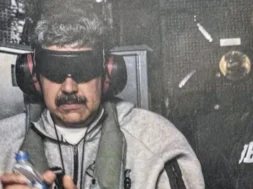
Venezuela is in a historic moment of political upheaval after President Nicolás Maduro was captured by U.S. forces on January 3, 2026. The operation — dubbed Operation Absolute Resolve — involved U.S. military strikes in Caracas and other areas, during which Maduro and his wife, Cilia Flores, were taken into custody and flown to New York. Wikipedia+1
Maduro is now being held in a federal detention facility in Brooklyn and is scheduled to appear in a Manhattan federal court on charges that include narcoterrorism conspiracy and cocaine importation conspiracy. U.S. authorities confirmed the superseding indictment as part of the ongoing legal action against him and several Venezuelan officials. Wikipedia
Interim Leadership and Internal Dynamics
In response to Maduro’s capture, Venezuela’s Supreme Court declared Vice President Delcy Rodríguez as the acting president to maintain continuity of government. Rodríguez has rejected U.S. claims and described the capture as a “kidnapping,” asserting that Venezuela’s institutions remain intact and that Maduro is still considered the nation’s president by his allies. Reuters+1
Senior government officials, including powerful military figures, have publicly rallied behind Maduro’s leadership and have signaled that key regime structures remain in place despite his absence. Your News
Responses from Venezuelans and Political Actors
Reactions among Venezuelans are mixed. Some in the diaspora celebrated the capture as a potential turning point toward justice and change, while others remain cautious given the long-standing influence of Maduro’s inner circle. CBS News
Opposition leader María Corina Machado praised the development, calling it a historic moment and anticipating a transition toward democratic restoration. CBS News
International Reaction
Governments around the world have sharply diverged in their responses:
-
Several European Union nations and Germany have called for a peaceful, political solution and emphasized respect for international law and Venezuelan sovereignty. The Guardian+1
-
China and Russia condemned the U.S. military action, demanding Maduro’s release and accusing the United States of violating international norms. The Times of India+1
-
Many Latin American leaders have expressed concern, urging diplomacy and restraint while some welcome the possibility of democratic change. Reuters
U.S. Position and Controversy
U.S. officials, including President Trump, have stated that the operation aimed to disrupt criminal networks and facilitate a transition in Venezuela. Trump has even suggested the United States would oversee parts of the country temporarily to ensure stability, though those claims have drawn criticism and legal concern. Catholic News Agency
Secretary of State Marco Rubio later suggested the U.S. does not anticipate additional large-scale actions now that Maduro is in custody, framing the move as a law enforcement action rather than an extended occupation. Jamaica Observer
What This Means for Venezuela
Despite Maduro’s capture, much of the political infrastructure he built remains operational, with powerful figures like Delcy Rodríguez and military leaders stepping forward to maintain governance. The situation remains fluid, with questions about legitimacy, popular support, economic stability, and international involvement still unresolved. RileySENTINEL
Humanitarian and economic pressures continue to loom, and regional neighbors are watching closely as Venezuelans navigate uncertainty on the ground.
