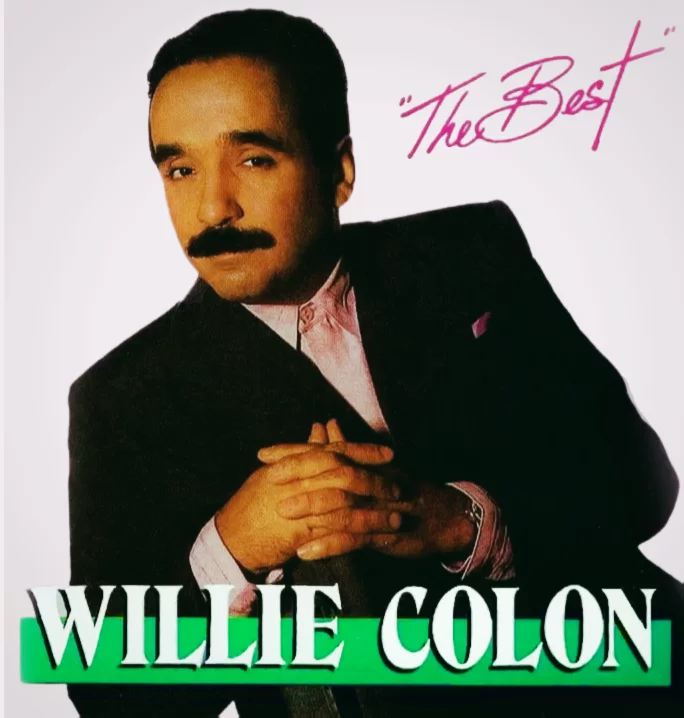



Today we honor William Anthony Colón Román, known to the world as Willie Colón a towering figure in salsa music, a cultural architect of the Nuyorican sound, and a lifelong advocate for community empowerment. His influence stretched far beyond the stage. He was not only a musician, but a storyteller, a bridge between cultures, and a voice for the overlooked.
A Bronx Beginning, A Global Impact
Born on April 28, 1950, in the South Bronx to Puerto Rican parents, Willie Colón came of age during a time when Latin music in New York was evolving into something bold and distinct. The streets of the Bronx shaped his ear, his politics, and his purpose.
As a teenager, Colón signed with the legendary label Fania Records, becoming one of the youngest artists on its roster. What followed would change Latin music forever. His early collaborations with Héctor Lavoe produced albums that defined the gritty, urban edge of salsa in the late 1960s and 1970s. Together, they gave voice to working-class Latino life in New York City telling stories of struggle, joy, migration, heartbreak, and survival.
Colón’s trombone-heavy arrangements became his signature. Raw. Streetwise. Unapologetically New York.
Redefining Salsa and Latin Identity
Willie Colón was not just making dance music. He was shaping identity. Through projects with Rubén Blades, particularly the landmark album Siembra, Colón helped elevate salsa into the realm of social commentary. Siembra remains one of the best-selling salsa albums of all time and is widely regarded as a turning point for the genre.
Songs like “Pedro Navaja” were cinematic in scope, tackling urban survival and moral complexity. These were not simple love songs. They were reflections of city life, inequality, and the immigrant experience. Colón understood that salsa could be both danceable and deeply political.
At a time when Latino communities were fighting for recognition and representation, his music offered both pride and power.
A Voice Beyond Music
Colón’s activism extended outside the recording studio. He was outspoken on issues affecting Latino communities, education, and political representation. He worked with community organizations and even ran for public office, reflecting his belief that cultural influence should translate into civic responsibility.
His career demonstrated that artistry and activism are not separate paths. They are intertwined. He believed in using his platform to advocate for equity and visibility, especially for Puerto Ricans and Latinos in the United States.
A Cultural Architect of the Nuyorican Sound
As part of the movement that brought salsa from neighborhood clubs to international stages, Willie Colón helped define what it meant to be Nuyorican proudly Puerto Rican, undeniably New York. Through the collective power of Fania All-Stars, he and his peers took Latin music to Africa, Europe, and Latin America, proving that this sound belonged on the world stage.
His arrangements were innovative, blending traditional Afro-Caribbean rhythms with urban edge. He made the trombone a lead voice in salsa, giving the genre a brassy, bold identity that still influences musicians today.
The Message He Left Behind
If there was one consistent message in Willie Colón’s career, it was this: culture matters. Representation matters. Storytelling matters.
He showed generations that Latin music could be sophisticated, political, global, and deeply rooted all at once. He reminded artists that success does not require abandoning your community. In fact, it can be built from it.
His music carried themes of resilience, migration, barrio life, systemic struggle, and hope. It honored the complexity of Latino identity in America not as a stereotype, but as lived reality.
A Lasting Legacy
Willie Colón’s impact cannot be measured only in record sales or awards. It lives in every salsa band that leans into social commentary. In every young musician from the Bronx who dares to believe their story deserves to be heard. In every diaspora community that finds itself reflected in song.
He was more than an entertainer. He was a cultural force.
Today, we remember William Anthony Colón Román with gratitude and respect. His trombone may rest, but his sound echoes across generations. His message of pride, consciousness, and community continues to resonate.
May his legacy remain as bold and enduring as the music he gave the world.
