BENITO BLOWN RECAP: How Bad Bunny Turned Halftime Into a Love Letter to Puerto Rico and the Americas
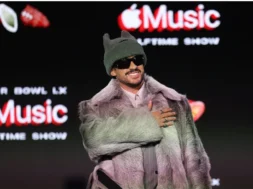






When Bad Bunny stepped onto the halftime stage for what fans quickly dubbed the “Benito Bowl,” it was immediately clear this was not going to be a standard medley of radio hits. The performance felt layered, intentional, and deeply personal. It was theatrical but grounded. Political but celebratory. Local in imagery yet global in reach. In a cultural moment where division often dominates headlines, Benito delivered something that felt rooted in unity without ignoring reality.
From the opening sequence, the weight of Puerto Rico was present. The visuals, the sound design, the choreography all pointed back to the island. When he launched into “El Apagón,” it was not just a crowd favorite. That song has become shorthand for conversations about power outages, infrastructure collapse, displacement, and the lingering effects of colonial status. Placing it at the center of a halftime show was bold. It forced a global audience to confront issues Puerto Ricans have been living with for years. Rather than sanitizing his message for mass appeal, Benito amplified it.
Then came the piragua truck rolling across the stage. To some viewers, it was colorful set design. To Puerto Ricans, it symbolized neighborhood culture, working-class hustle, and childhood memory. The piragua vendor is not just a nostalgic image. It represents small business survival, community gathering, and everyday life on the island. By spotlighting something so ordinary on such an extraordinary platform, he elevated it. He made it clear that culture does not have to be polished or commercialized to deserve the world’s attention.
One of the most debated visuals was the appearance of women dressed in construction gear. Social media immediately began dissecting the symbolism. Some viewers saw it as a direct reference to rebuilding Puerto Rico after hurricanes and ongoing infrastructure challenges. Others interpreted it as commentary on development and gentrification, an issue Benito has openly criticized in his music and interviews. There is also a powerful gender layer. Women in construction attire can symbolize women rebuilding communities, taking ownership of land, and challenging traditional roles. The ambiguity felt deliberate. Rather than spell out the message, he invited interpretation, sparking conversation across platforms. In that way, the imagery extended the performance beyond the stadium.
Midway through the show, the staging shifted and transported viewers to New York. The skyline visuals and choreography evoked the Puerto Rican diaspora, especially in boroughs like the Bronx and Spanish Harlem, where generations of Puerto Ricans shaped salsa, hip hop, and broader American culture. It felt like a recognition that Puerto Rican identity does not stop at the island’s shoreline. It lives in the mainland United States, in Latin America, and across global cities.
The wedding sequence added another emotional layer. It was vibrant, romantic, and distinctly Latin in its aesthetic. When Lady Gaga appeared as a surprise guest, the collaboration felt symbolic beyond celebrity spectacle. Gaga represents mainstream American pop dominance. Benito represents a Spanish language global takeover. Sharing that stage felt like a visual metaphor for cultural crossover without erasure. It was not Benito adapting to fit in. It was two worlds meeting in the middle.
Perhaps the most striking element of the Benito Bowl was how effortlessly it united audiences across the Americas. The majority of the performance was in Spanish. There was no attempt to translate or dilute the message for comfort. Yet millions who do not speak Spanish were captivated. That alone signals a cultural shift. Latin music is no longer treated as a niche genre. It commands the center. In a time marked by immigration debates, cultural polarization, and political tension across North and South America, seeing a Spanish language performance headline such a massive platform felt historic.
Toward the end of the show, a message appeared on a board that read, “The only thing stronger than hate is love.” It was simple but heavy. The phrase reframed the entire performance. Yes, there were political undertones. Yes, there were critiques woven into the visuals and song choices. But the overarching theme was not anger. It was love for Puerto Rico. Love for diaspora communities. Love for culture. Love as resistance.
The reactions have reflected how layered the performance was. Longtime fans praised it as one of his most meaningful televised moments, highlighting how seamlessly he blended activism and artistry. Many Puerto Ricans expressed deep pride, saying they felt represented on a scale rarely seen. Across Latin America, viewers described the show as affirming, emotional, and powerful.
Political commentators were divided. Some critics argued that sports should remain apolitical and accused the performance of pushing an agenda. Others defended it, noting that halftime stages have long been spaces for social commentary. Supporters emphasized that highlighting real issues affecting Puerto Rico is not divisive. It is honest.
For viewers unfamiliar with Bad Bunny’s work, the show served as an introduction. Many admitted online that they did not understand every lyric but were drawn in by the energy, visuals, and crowd response. Streaming platforms saw immediate spikes as curious viewers searched for “El Apagón” and other tracks from the setlist. The performance functioned not only as a cultural statement but as a gateway into his catalog.
What made the Benito Bowl stand out was not just production value. It was coherence. Every prop, every costume, every transition seemed intentional. In a single halftime slot, Bad Bunny spotlighted Puerto Rico’s struggles, honored its traditions, acknowledged diaspora influence, elevated women symbolically, collaborated across genres, and delivered a unifying message that resonated beyond language barriers.
It was entertainment, yes. But it was also documentation of a cultural moment. And in times like these, that kind of visibility carries weight.