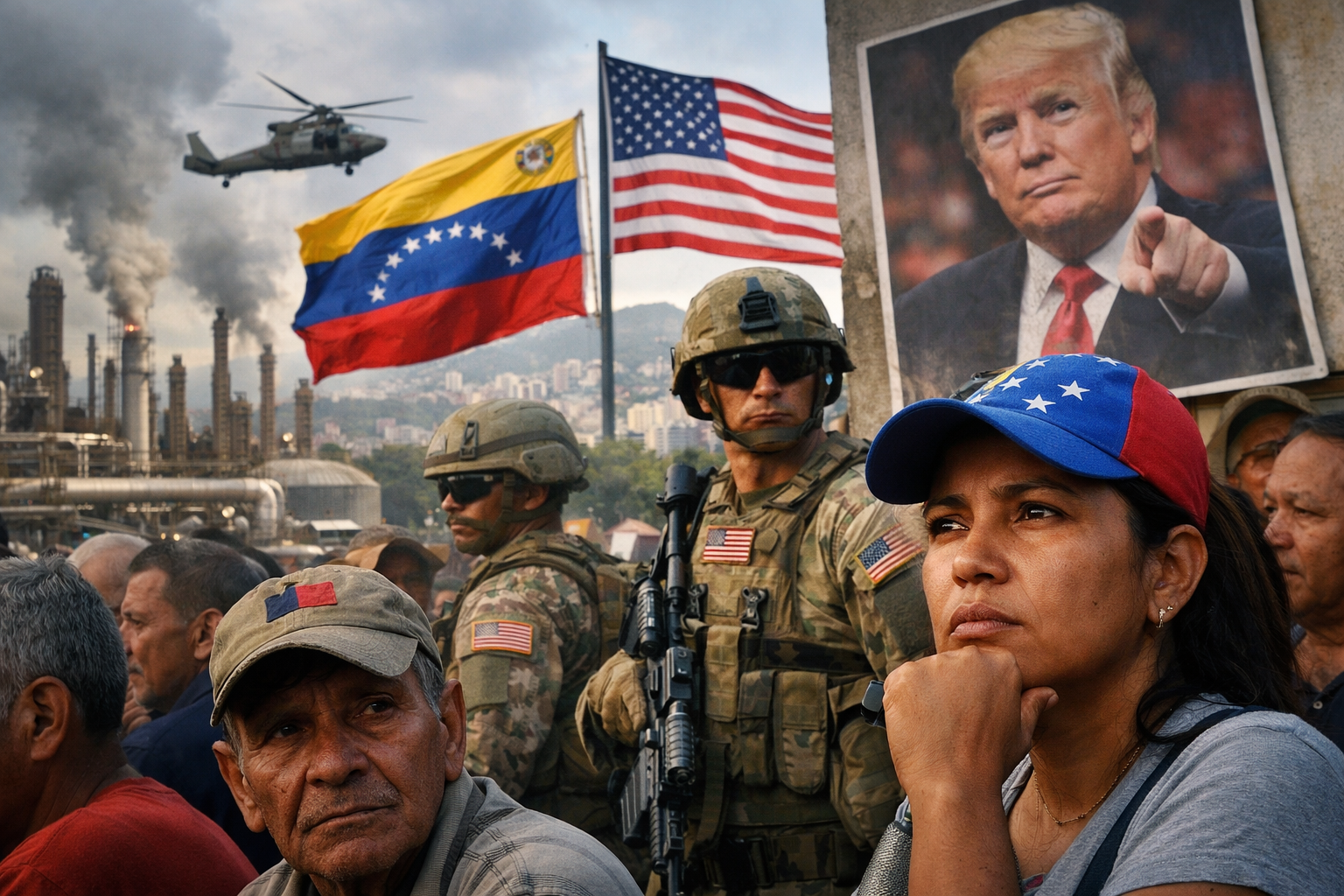







When Donald Trump said the U.S. was going to “run Venezuela,” he said it straight, no fluff. After Nicolás Maduro was taken into U.S. custody, Trump made it clear that Washington plans to oversee what comes next, calling it a transition meant to bring “order” and “stability.”
The Trump administration has said the goal is not to govern Venezuela day to day, but to control the conditions around the transition. Still, no clear timeline or structure has been shared. What has been clear is the focus on oil. Trump openly talked about U.S. companies stepping in to repair Venezuela’s oil industry and restart production, framing it as necessary for recovery.
For people in Venezuela, that uncertainty hits home. Years of sanctions, shortages, and political instability have already shaped daily life. A U.S.-managed transition raises real questions about who makes decisions, who benefits economically, and whether basic needs like food, healthcare, and safety will actually improve.
This matters because what happens next will affect more than leadership at the top. It will shape whether Venezuelans get stability on their own terms or experience another shift in power decided outside the country. For many families, the issue isn’t politics—it’s whether life finally gets easier, or just changes hands.
